

Cybercriminals do not always begin by attacking a firewall or exploiting a server. Sometimes, they simply send a convincing email, make an urgent phone call, or persuade an employee to click the wrong link.
That is why cybersecurity is not only an IT responsibility. Every person who uses company email, accesses business systems, handles customer information, or works from a connected device plays a role in protecting the organization. Download our security awareness guide (PDF).
Security awareness training helps employees understand that role—and gives them practical habits they can use every day.
Why employees are frequently targeted
Modern technical defenses can block a large number of threats, but attackers continually look for ways around them. Employees are attractive targets because normal business communication often involves trust, urgency, shared files, payment requests, password resets, and messages from vendors or executives.
An attacker may impersonate:
- A manager requesting an urgent payment
- A vendor sending an updated invoice
- A delivery service asking the recipient to open a tracking link
- Microsoft, Google, or another familiar provider requesting a password reset
- A technician asking for login information or remote access
These messages are designed to look routine. The goal is often to make someone react before stopping to verify the request.
What effective security awareness training should teach
Security training should be practical, easy to understand, and connected to situations employees actually encounter. A strong program should teach employees how to:
Recognize phishing and suspicious messages
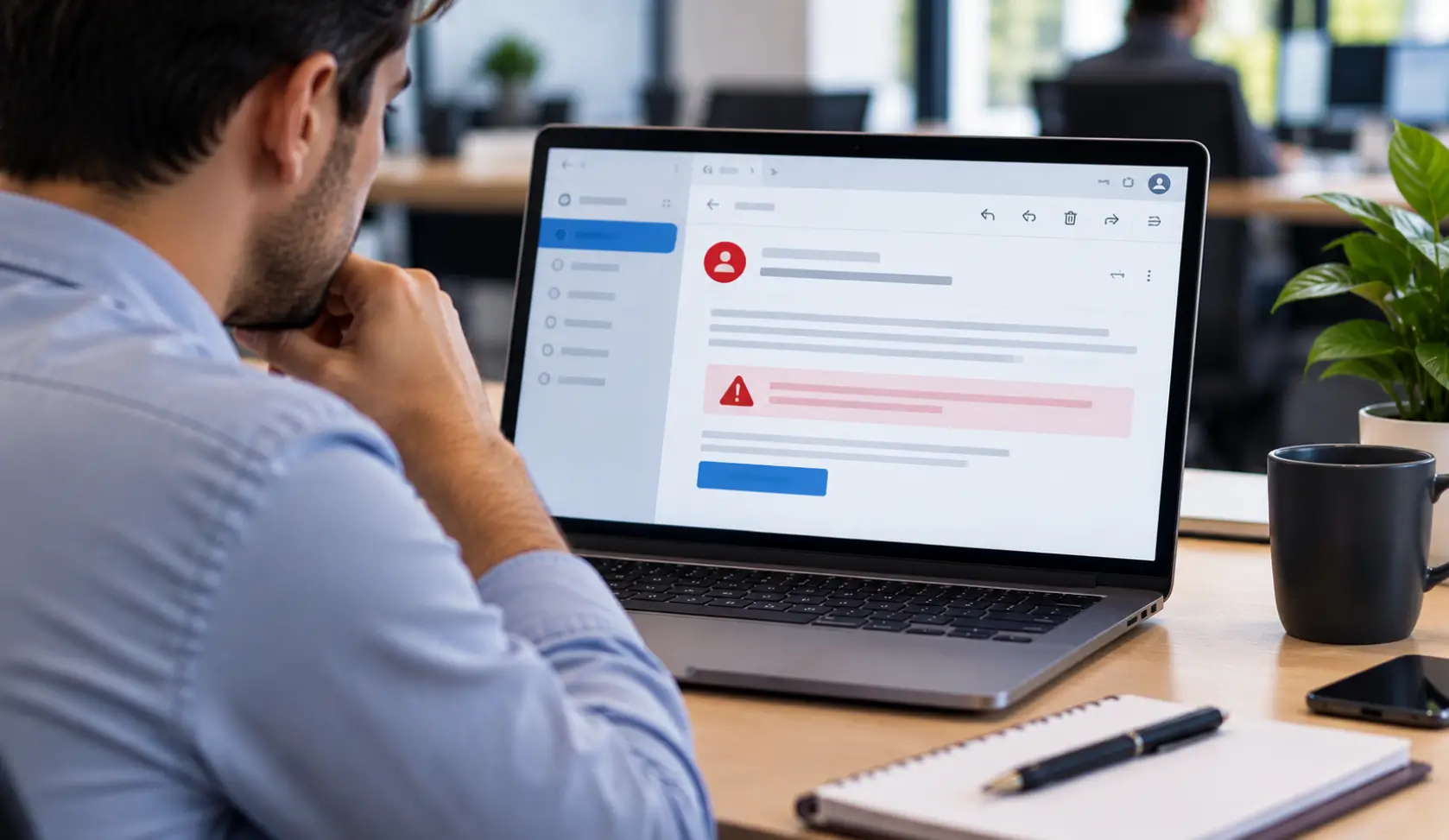
Employees should learn to examine the sender, links, attachments, tone, and context of a message. Unexpected urgency, unusual payment instructions, login requests, and last-minute account changes should all trigger additional verification.
Teaching staff to spot malicious emails is the most direct way to reduce your business attack surface and prevent credential theft.
Protect passwords and accounts
Every account should use a strong, unique password. Password managers can make this easier, while multifactor authentication adds another layer of protection when a password is stolen or exposed.
Employees should never approve an unexpected authentication prompt or share a verification code with someone who contacts them.
Handle sensitive information carefully
Customer records, financial information, passwords, employee data, and confidential business documents should only be stored and shared through approved systems. Sensitive information should not be sent to personal email accounts or placed in unauthorized cloud-storage services.
Use devices securely
Workstations and mobile devices should be locked when unattended. Updates should not be postponed indefinitely, unknown USB devices should not be connected, and unapproved applications should not be installed on business systems.
Verify unusual requests
If a request involves money, credentials, confidential information, or remote access, employees should verify it through a trusted second channel. That may mean calling a known telephone number, speaking with the requester directly, or contacting the company’s IT provider.
Report incidents quickly
Employees should know exactly where to report a suspicious message or possible mistake. Fast reporting gives the technical team an opportunity to reset credentials, isolate a device, block a sender, or investigate activity before the problem spreads.
Rapid reporting is crucial because understanding what happens during a cyberattack proves that every wasted minute allows attackers to spread laterally.
A mistake should be reported—not hidden
Even careful employees can click a convincing link or respond to a sophisticated message. What happens next can determine whether the event remains manageable or becomes a serious incident.
Employees should be encouraged to report mistakes immediately without fear of embarrassment. Deleting the message or waiting to see what happens can cost valuable time. A healthy security culture rewards prompt reporting and treats it as part of the defense process.
Security awareness is an ongoing process
A single annual presentation is not enough to address an environment that changes throughout the year. New employees arrive, business processes change, and attackers adopt new tactics.
Continuous education succeeds because small business cybersecurity is an organizational team effort, not just an IT responsibility.
An effective awareness program can include:
- Brief recurring training sessions
- Phishing simulations
- New-employee security orientation
- Clear reporting instructions
- Short reminders about emerging threats
- Follow-up coaching when an employee needs additional help
The objective is not to turn every employee into a cybersecurity expert. It is to develop a workforce that recognizes warning signs, pauses before taking risky actions, and knows when to ask for help.
For a broader look at the attack lifecycle, explore our guides to what happens before a cyberattack, what happens during a cyberattack, and what happens after a cyberattack.
How to Measure Security Awareness Training

Security awareness training should be measured by what employees do, not only by whether they completed a training module. A business can review training completion, phishing simulation results, reporting behavior, and repeated mistakes to see where additional guidance is needed.
For example, if employees complete training but continue to click simulated phishing emails or rarely report suspicious messages, the business may need more targeted training. Tracking reporting behavior is particularly useful because recognizing and reporting a suspicious message is part of the response process.
Businesses can review:
- Training completion: Are employees completing assigned training?
- Phishing simulation results: How often do employees interact with simulated phishing messages?
- Reporting rate: Are employees reporting suspicious emails or messages?
- Repeat behavior: Are the same employees repeatedly making similar mistakes?
- Follow-up improvement: Do results improve after additional training or reminders?
NIST also notes that phishing click rates should not be viewed in isolation because the difficulty and context of a simulated phishing message can affect the results.
The goal is not simply to identify employees who made a mistake. The goal is to use the results to identify where the security awareness program needs improvement.
Build a stronger human layer of security
Technology remains essential, but it works best when employees understand how to support it. Security awareness training helps reduce avoidable risk, reinforces company policies, and gives employees the confidence to respond appropriately when something does not look right.
Partnering with BCS allows your business to implement specialized cyber security training for employees in Austin tailored to your daily workflow.
FAQs
What is security awareness training for small businesses?
It is an educational program that teaches employees how to identify, avoid, and report cyber threats such as phishing, ransomware, social engineering, and password theft in their daily work routines.
How often should employees receive cybersecurity training?
Rather than a single annual lecture, best practices recommend ongoing micro-training sessions (5–10 minutes monthly or quarterly) combined with routine, unannounced simulated phishing tests throughout the year.
What is a phishing simulation?
A simulated phishing test is a safe, controlled mock email sent to staff mimicking real-world attacker tactics. Employees who click the link receive immediate, constructive coaching on what red flags were missed.
Do cyber insurance policies require employee security training?
Yes. Most cyber liability insurance carriers in 2026 mandate documented, recurring security awareness training and phishing simulations as a condition for policy issuance or claims payout.
Can training completely eliminate human error?
No program eliminates 100% of human error. Training aims to build a vigilant workforce that catches the vast majority of threats, supported by technical safeguards like MFA and EDR to catch mistakes when they occur.
What should employees do if they click a suspicious link?
Employees should immediately report it to their IT department or managed provider without fear of punishment, disconnect the device from the network if instructed, and change any compromised passwords immediately.
What topics should small business security training cover?
Core topics include recognizing phishing emails, credential hygiene, avoiding public Wi-Fi risks, verifying financial transfer requests, mobile device security, and following incident reporting procedures.
How does BCS manage employee training for Austin companies?
Business Communication Solutions delivers automated, role-specific training modules, schedules simulated phishing campaigns, tracks completion reports for compliance, and provides tailored coaching for high-risk staff.
Business Communication Solutions helps organizations strengthen both the technical and human sides of cybersecurity. We can help assess your current environment, improve security controls, and build practical awareness training around the threats your employees are most likely to face.
Featured photo by Azwedo L.LC on Unsplash.