

Rodent activity around a cable route can create additional considerations during a fiber optic installation. Damaged cable jackets and exposed cabling may affect the condition and reliability of a network installation. Selecting an appropriate cable protection method is therefore an important part of planning the work.
During one project, the BCS team encountered a job site with mild rodent infestation in certain areas. The team discussed several options with the customer for protecting the new fiber optic cable. The customer wanted to manage material costs and supplied 3/4-inch nonmetallic liquidtight conduit for the installation.
BCS accepted the customer’s material choice and completed the work on the same day, with a delay of a few hours.
This project provides an example of how customer requirements and material choices can influence a cable installation when rodent activity is present.
The Challenge: Fiber Optic Cable Installation in an Area with Rodent Activity
Rodents can damage cables by chewing through their outer jackets. Depending on the cable construction and the extent of the damage, this may expose internal components and create a need for inspection or repair.
For businesses, cable damage can become a concern when communication infrastructure runs through areas where rodent activity has been observed.
In this BCS project, the team identified mild rodent infestation in certain areas of the job site. The team discussed available protection options with the customer before proceeding with the fiber optic cable installation.
The original project report does not specify the exact cable route or the other protection options discussed, so those details are not assumed here.
The Customer’s Choice: 3/4-Inch Nonmetallic Liquidtight Conduit
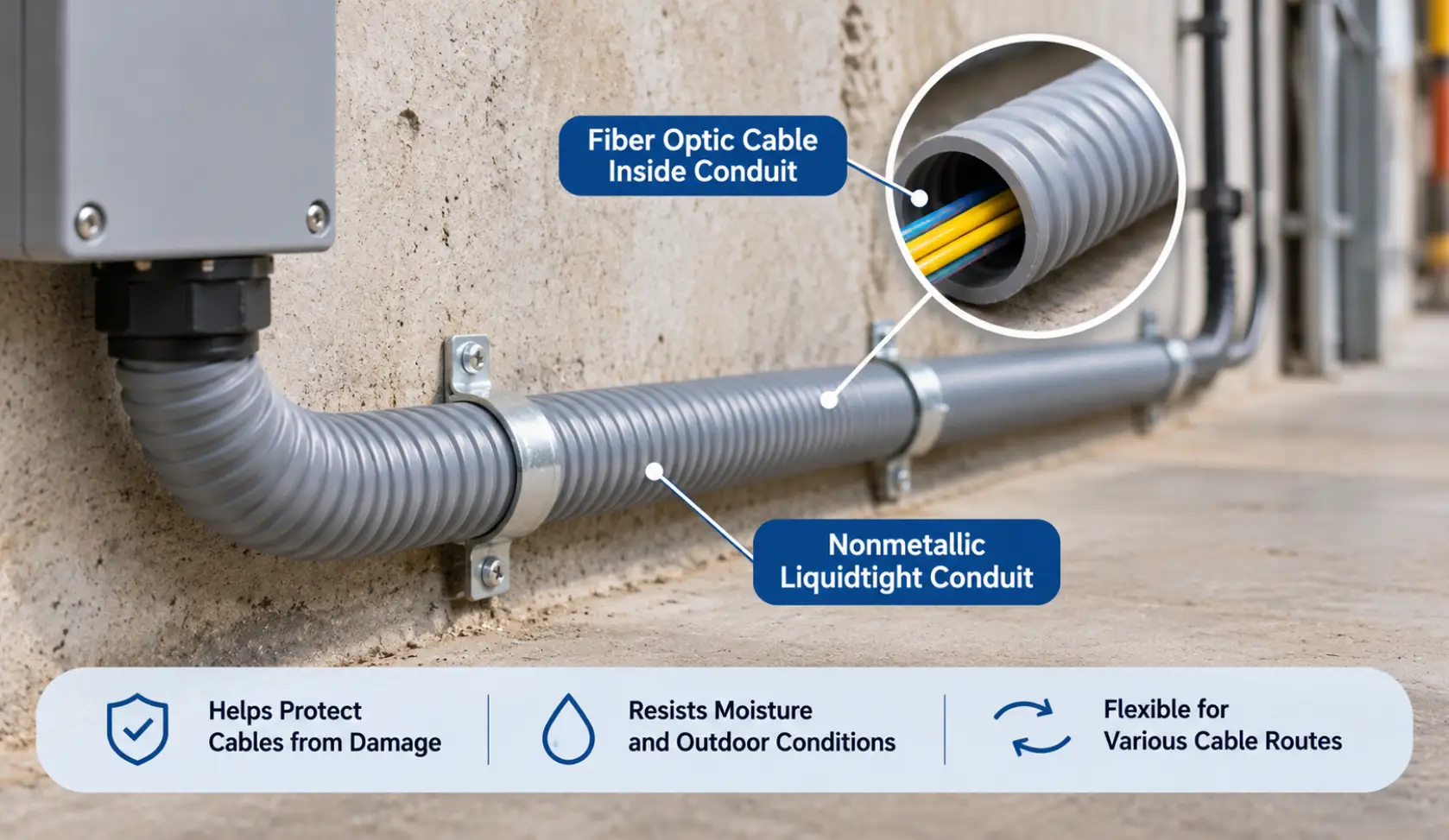
The customer wanted to reduce material costs and supplied 3/4-inch nonmetallic liquidtight conduit for the project.
Liquidtight flexible nonmetallic conduit is used in applications where wiring requires a flexible protective pathway. Depending on the specific product, manufacturer documentation may identify properties such as resistance to water, oil, sunlight, abrasion, or crushing.
However, these properties should not automatically be interpreted as proof of rodent resistance. The actual performance and suitability depend on the conduit product and its published specifications.
For this project, the customer selected the conduit, and BCS accepted the requested material choice.
Why Material Selection Matters in Cable Installations
Cable protection should be considered in relation to the installation environment and the requirements of the project.
Before selecting a conduit or other protective method, businesses and installation teams should consider:
1. The Installation Environment
The conditions surrounding a cable route can influence the type of protection required. Areas with known rodent activity may need additional evaluation before the installation method is selected.
2. The Cable and Conduit Specifications
The cable and protective pathway should be suitable for the intended installation. Check the manufacturer’s documentation for the relevant material, application, environmental ratings, and installation requirements.
3. The Customer’s Material Requirements
Customers may have preferences or existing materials they want considered for a project. Those materials should be reviewed for suitability before installation rather than assumed to meet every requirement.
4. Future Inspection and Maintenance
Cable routes should remain accessible for inspection and maintenance where the installation design allows. If rodent activity continues, the area may require further inspection and appropriate corrective action.
Does Liquidtight Conduit Prevent Rodent Damage?
Liquidtight conduit should not automatically be described as rodent-proof.
Manufacturer specifications for nonmetallic liquidtight conduit commonly discuss properties such as flexibility, crush resistance, sunlight resistance, and protection from certain environmental conditions. These specifications are product-specific.
For example, Southwire’s Ultratite Type NM documentation identifies oil resistance, sunlight resistance, and crush resistance among its listed properties. It does not establish that every liquidtight conduit product is resistant to rodent chewing.
Businesses dealing with persistent rodent activity should evaluate the actual cable protection requirements and select products based on their documented suitability.
The BCS project described here reflects one customer’s material selection and one completed installation. It should not be interpreted as a guarantee that nonmetallic liquidtight conduit will prevent rodent damage in every environment.
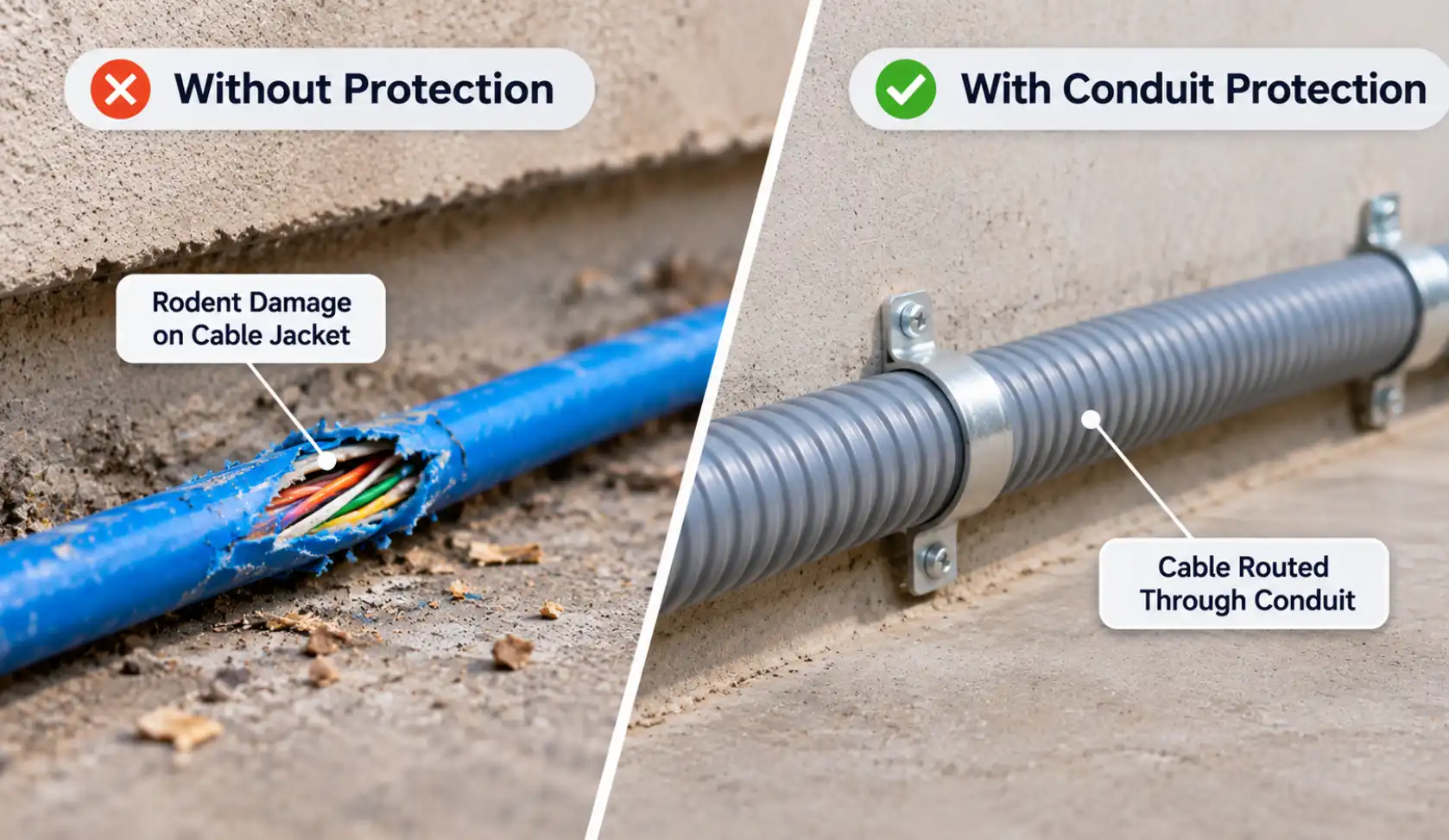
The Project Outcome
After discussing the available options, the customer provided the 3/4-inch nonmetallic liquidtight conduit and BCS accepted the requested material choice.
The team completed the work within the same day, with a delay of a few hours.
The original project account does not provide further measurements, testing results, or long-term performance data. Therefore, no claims are made about the conduit’s long-term resistance to rodent damage.
Planning Fiber Optic Cable Protection for Your Business
A fiber optic installation should account for the environment in which the cable will be routed. Where rodent activity is present, protection requirements should be considered before work begins.
Businesses planning a cabling project can review relevant installation considerations, including:
- The areas through which the cable needs to run.
- Whether rodent activity has been observed along the proposed route.
- The cable manufacturer’s installation requirements.
- The specifications of any proposed conduit or protective material.
- Access requirements for future inspection and maintenance.
For additional information, see BCS’s guides on exterior cable run best practices, outside plant fiber optic cable, and outdoor-rated fiber for commercial installations.
Frequently Asked Questions
1. Can rodents damage fiber optic cables?
Yes. Rodents can chew through cable jackets and damage the cable. The extent of the damage depends on the cable construction and the amount of chewing.
2. Why is conduit used during cable installation?
Conduit provides a protective pathway for cables. The protection it offers depends on its material, construction, product rating, and installation conditions.
3. Is nonmetallic liquidtight conduit rodent-proof?
It should not automatically be considered rodent-proof. Check the specific manufacturer’s documentation for the product’s tested and published properties.
4. What size conduit did BCS use in this project?
The customer supplied 3/4-inch nonmetallic liquidtight conduit for this fiber optic cable installation.
5. Should businesses inspect cable routes where rodents are present?
Yes. If rodent activity has been observed, the affected areas and nearby cable routes should be evaluated for visible damage and potential exposure.
6. Can customers provide their own conduit for a cabling project?
Material selection can be discussed with the installation provider. The proposed material should be reviewed for suitability for the specific cable and installation requirements before work proceeds.
7. Does conduit guarantee that cables will not be damaged?
No. Conduit provides a protective pathway, but no general guarantee against all forms of cable damage should be assumed. Product specifications and site conditions matter.
Discuss Your Fiber Optic Cabling Requirements with BCS
Cable routing and protection requirements can vary depending on the building, installation environment, and project specifications.
Business Communication Solutions (BCS) provides voice and data cabling services for businesses. If you are planning a fiber optic installation or need to discuss cable routing requirements, contact BCS to review your project.
Related Guides
- Low Voltage Wiring Contractor in Austin
- Why Professional Data Cabling Boosts Business Efficiency
- How Poor Data Cabling Affects Network Speed and Stability
- Exterior Cable Run Best Practices
- Outside Plant Fiber Optic Cable
- Outdoor-Rated Fiber for Commercial Installations
- Long-Distance Fiber Optic Cabling Through Woods
- Fiber Optic vs. Copper Against Lightning