

Security Camera System Buying Guide

Use this guide to compare camera types, weather ratings, recording options, lens angles, PoE cabling, lighting, and other features for homes and businesses. For help turning your plan into a working system in Austin, see BCS security camera installation and repair.

IP65:

Dust-tight enclosure with protection against water jets. Check the manufacturer's installation guidance for the mounting location.

IP66:

Dust-tight enclosure with protection against powerful water jets. Weather resistance still depends on proper mounting and cable sealing.

IP67:

Dust-tight enclosure rated for temporary immersion under specified test conditions. It does not guarantee that an exposed connector or cable is waterproof.

IP68:

Dust-tight enclosure rated for immersion under conditions specified by the manufacturer. Check the product documentation for its tested depth and duration.

What do IP ratings mean for outdoor cameras?

Is there a huge difference between 1080p or 4K camera system?

4K cameras can capture more pixels than 1080p cameras, which may help preserve detail when reviewing footage. Resolution alone does not determine the viewing angle or whether a face or license plate will be readable. Lens choice, camera placement, distance, lighting, frame rate, and recording settings also matter. Higher resolution generally requires more storage and bandwidth. BCS can help match camera specifications to what you need to identify.

How do microSD, NVR, DVR, and cloud recording compare?

microSD: Some cameras record to a card inside the device. Check card compatibility, capacity, recording mode, and how footage will be recovered if the camera is damaged or stolen.

NVR: A network video recorder receives video from compatible IP cameras over the local network and records it to installed storage. The system does not inherently need an internet connection for local recording; remote access may require one.

DVR: A digital video recorder commonly records footage from compatible cameras connected over coaxial cabling.

Cloud: A supported camera or recorder uploads footage through an internet connection to a provider. Compare subscription costs, retention, upload bandwidth, privacy settings, and what happens during an outage.

Security angle of views important

Is angle of views important?

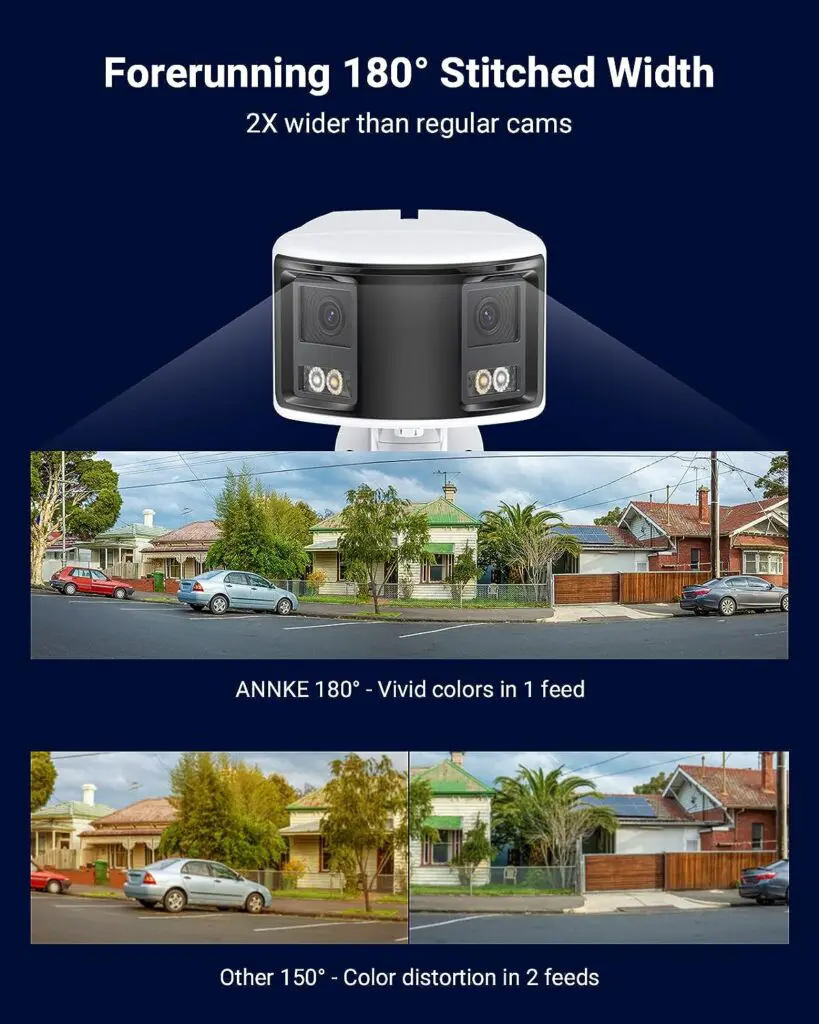
A wider field of view covers more area, but distant objects take up fewer pixels in the image. A narrower view may capture more useful detail at a specific entrance, gate, or driveway. We choose placement and lens angle based on the scene and what you need to see in recorded footage.

lens size

Does lens size matter?

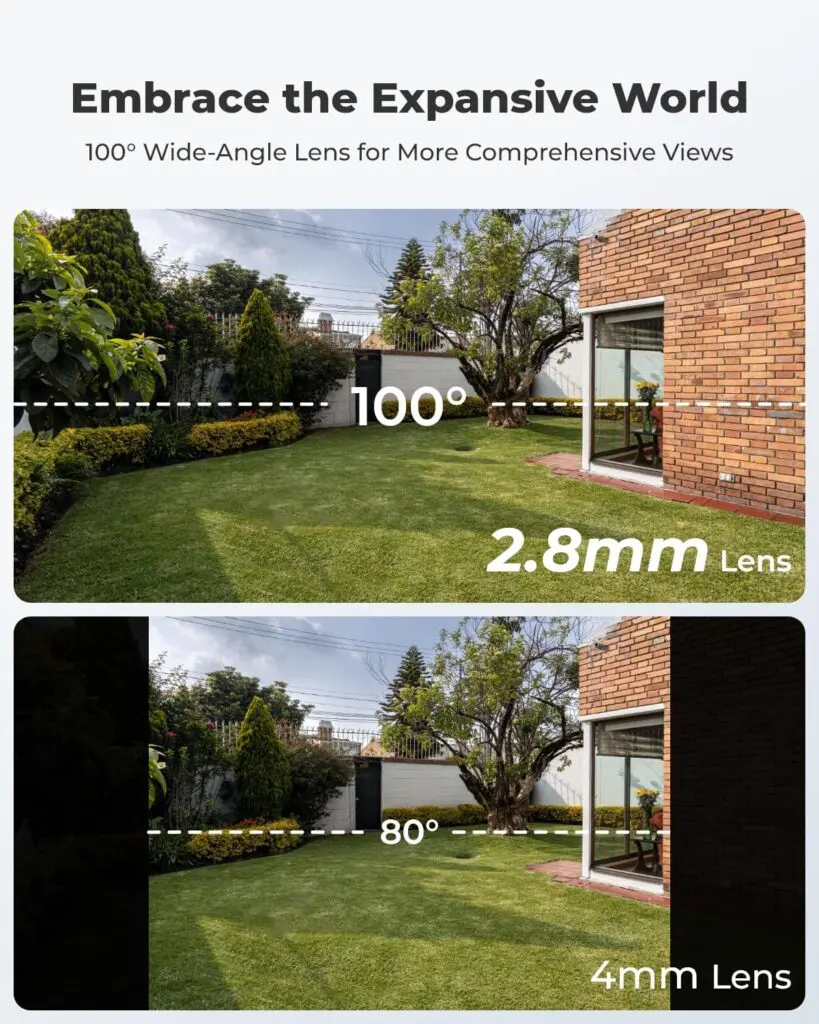
The field of vision and zoom level of a security camera are determined by the size of its lens. By far the most common lens choices are 2.8mm and 4mm. These provide the broadest field of vision. A wider-angle shot is produced by a shorter focal length (2.8mm), while a narrower angle photo is produced by a longer focal length (4.0mm). About a 90-degree viewing angle is provided by 2.8mm. An average viewing angle of 4mm is around 75 degrees.

On-Premises vs Cloud-Based video surveillance system?

On-site recording: Cameras store video on a local recorder or storage device. A properly configured system can record locally during an internet outage if power and the local network remain available. You maintain the equipment, storage, backups, and updates.

Cloud recording: Supported cameras or recorders send video to a provider’s storage. This may simplify remote access and give you off-site copies, but it depends on adequate upload capacity and may carry subscription and retention limits. Some systems combine local and cloud recording. BCS can compare the options for your coverage and recovery needs.

ONVIF vs Proprietary
Cloud-Based video surveillance system

ONVIF vs Proprietary

ONVIF publishes profiles that help compatible IP cameras and recording systems work together. Compatibility depends on the specific models, firmware versions, and supported profiles; advanced features may still require a manufacturer app or matched recorder. Check the ONVIF conformant products database and the manufacturer documentation before mixing equipment.

Some systems use manufacturer-specific apps, storage, or features. Those can work well as a matched system, but integration and future replacement options vary by model. BCS can review an existing camera and recorder before recommending additions or a replacement.

Bullet vs. Turret vs. Dome vs. Fisheye vs. Floodlight vs. PTZ

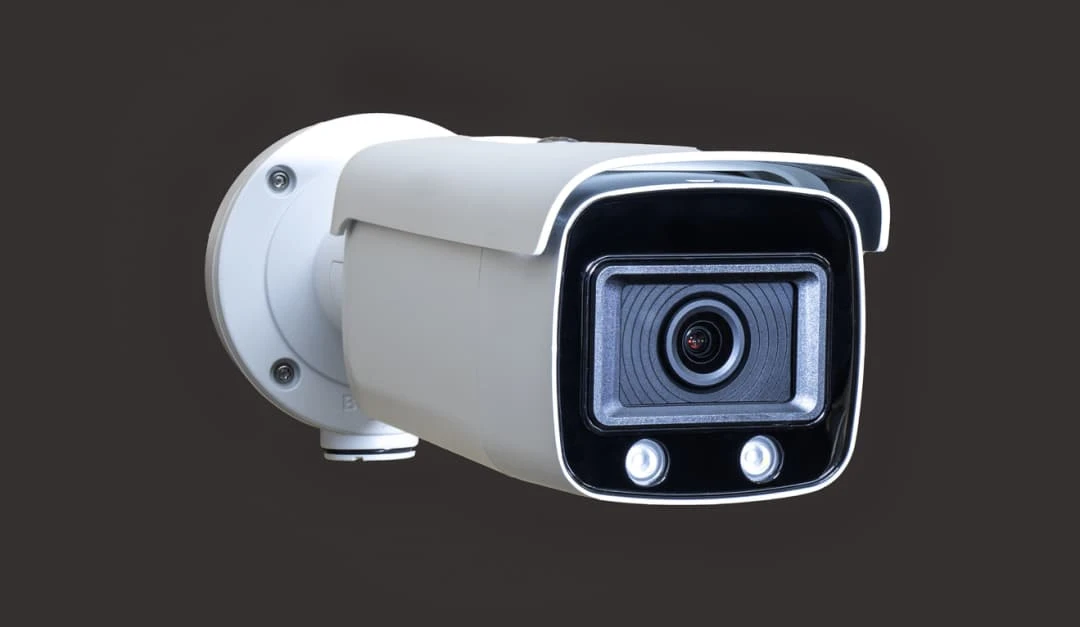
Bullet Camera

Bullet Camera

Bullet Camera– Reason for the name “bullet camera” is their unique cylindrical form, which resembles a bullet shell. The installation and range of bullet cameras is their primary advantages. Because of its extended viewing range, bullet cameras are perfect for monitoring expansive spaces like parking lots and backyards. Additionally, bullet cameras are simpler to install and allow for the mounting of larger lenses on their body because of their design. A slight lip at the tip of the bullet camera helps shield it from weather and glare, making it perfect for outdoor use. Also, a bullet camera’s powerful infrared LED allows it to capture incredibly accurate photos in a range of light settings during the day. A bullet camera is typically quite huge and noticeable, but a miniature bullet camera provides an alternative. Mini bullet cameras can be any size, small enough to be hidden inside your home or huge enough to serve as a noticeable deterrent for outside security.
Turret Camera

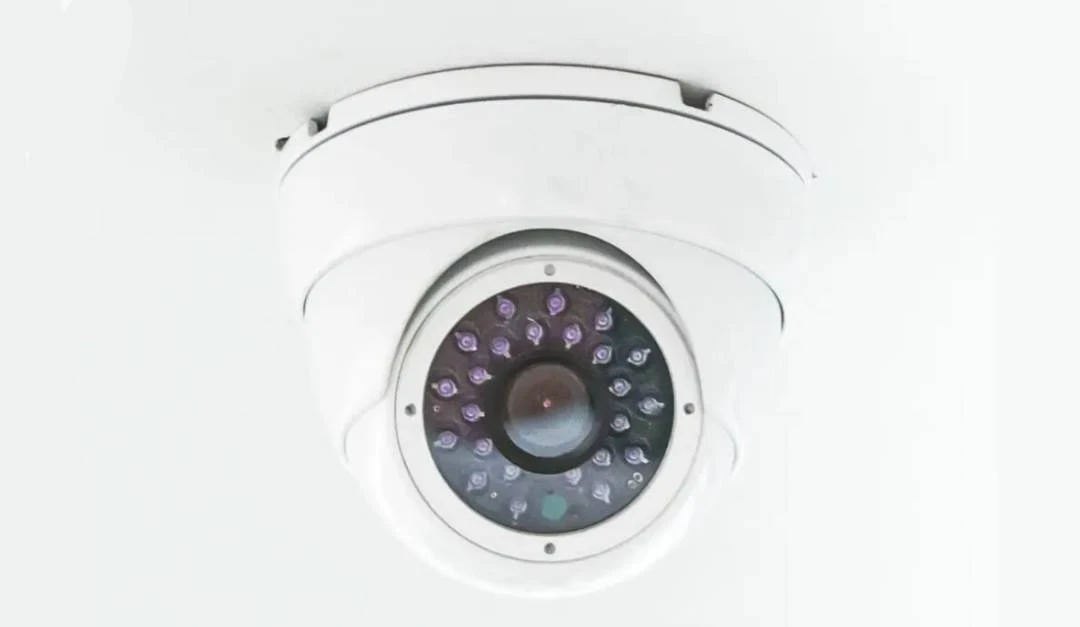
Turret Camera

Turret Camera– Comparable to dome cameras, but without a cover. Since they are viewed as a middle ground between the dome and the bullet, they are likely one of the most widely used camera options. It has a full range of motion, though you might not be able to tell because it’s essentially a ball in a socket. The majority of turret cameras are equipped with infrared night vision, which enables the camera to record images in total darkness. Turret cameras don’t have a dome shell, so they are shielded from glare effects unlike dome cameras with glass housing. Furthermore, compared to other cameras, its distinctive construction facilitates adjustment. Turret dome cameras are frequently utilized in government installations, commercial buildings, and residential video surveillance systems.
Dome Camera

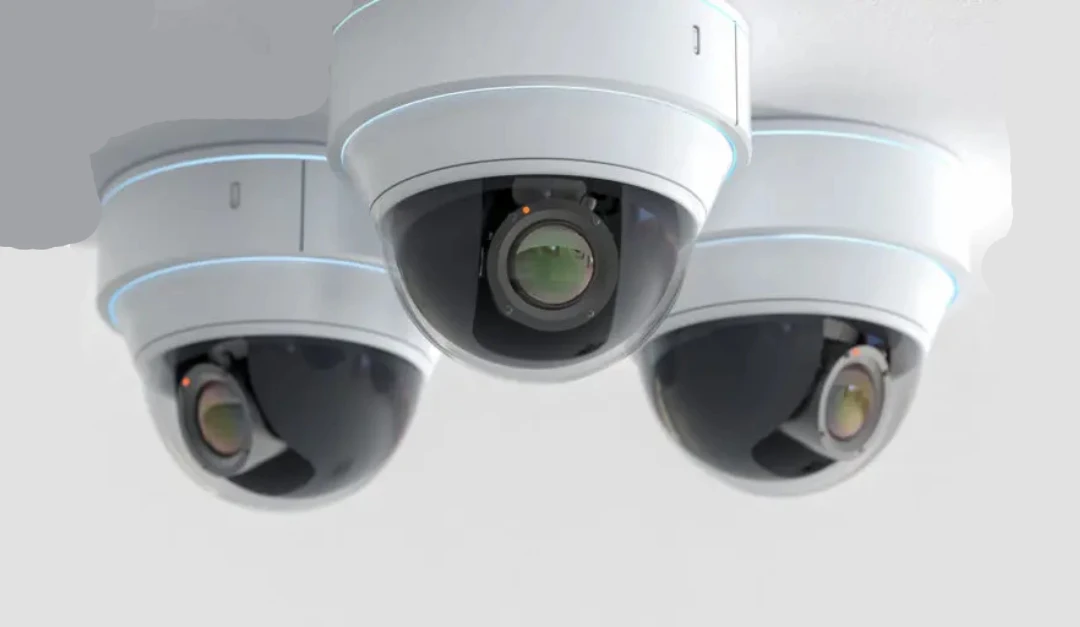
Dome Camera

Dome Camera– The circular, dome-shaped housing of dome security cameras makes them clearly identifiable, and it allows for a great deal of versatility in focusing distance adjustment for precise positioning. Because of their exceptional coverage for almost every use scenario, dome security cameras are incredibly adaptable and may be utilized in both indoor and outdoor environments. Due to their vandal-proof dome housing, infrared (IR) LED light technology for night vision, and strong metal bases that guard against tampering or vandalism, dome security cameras are the perfect choice for dependable surveillance in challenging environments.
Fisheye Camera

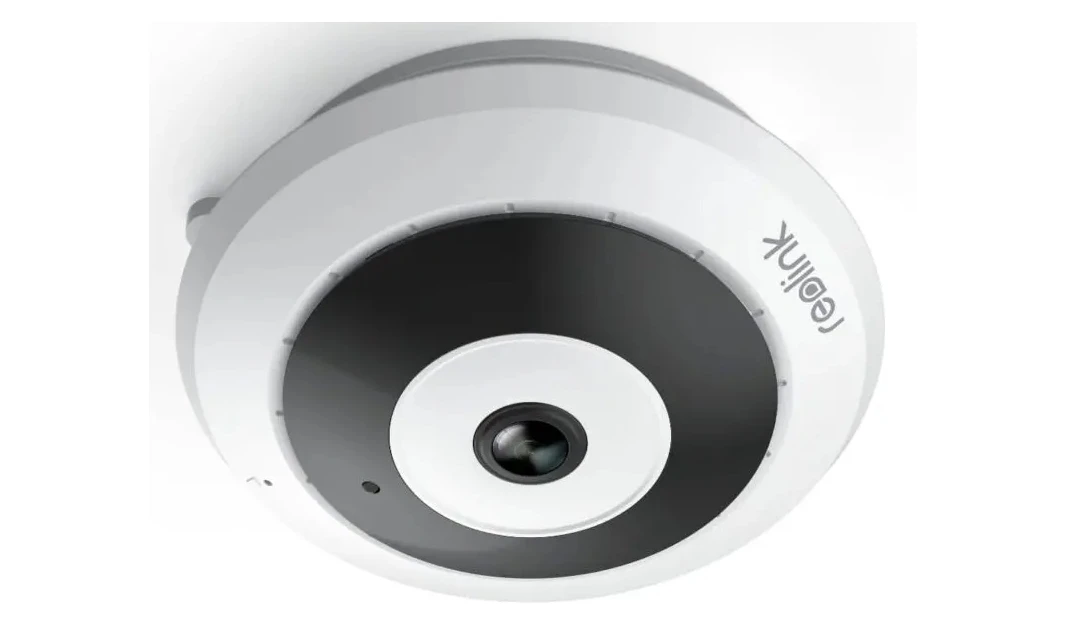
Fisheye Camera

Fisheye Camera– Fisheye lenses are renowned for having an incredibly wide field of view. The broad panoramic or hemispherical image produced by a fisheye lens is named for its similarity to the distorted, round, and incredibly wide image that appears when looking through a door’s peephole. The majority of fisheye cameras provide a 360° panoramic view, allowing them to cover a very large area without any blind parts. Fisheye cameras include exceptional characteristics including night vision, HD quality, 3D noise reduction, etc. in addition to its ultra-wide-angle lens. Factory sites, hospitals, parking lots, airports, hotels, and other establishments frequently utilize fisheye cameras because of their exceptionally wide angle, vandal resistance, and discreet appearance.
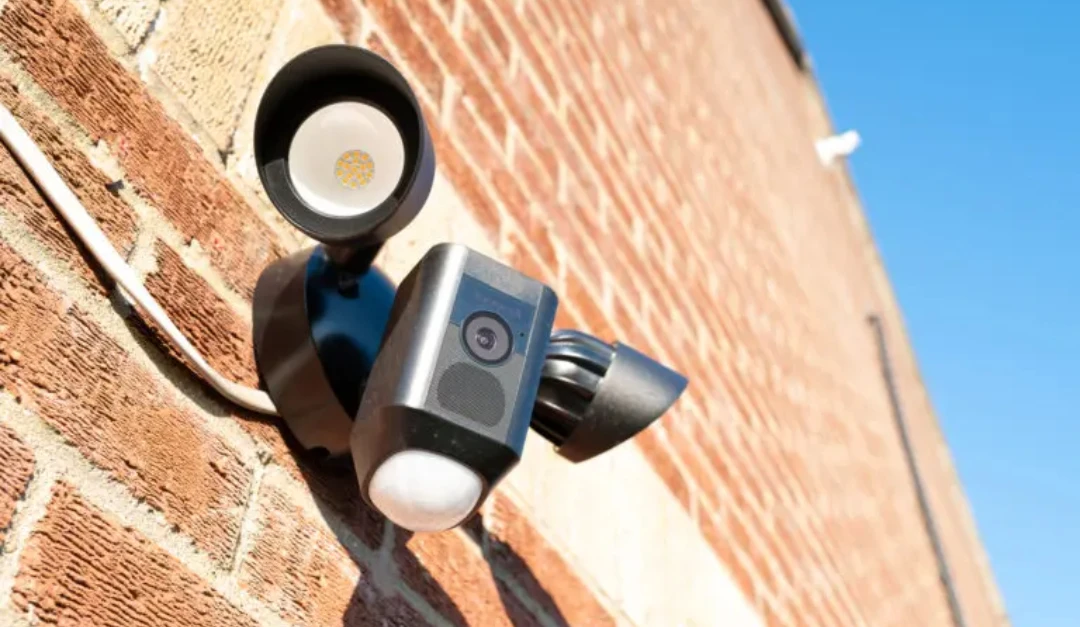
loodlight Camera

Floodlight Camera

A floodlight camera combines a camera and outdoor lighting. It can improve visibility at an entrance, driveway, or yard, but the best result depends on placement, the available power source, and how the light affects recorded video.
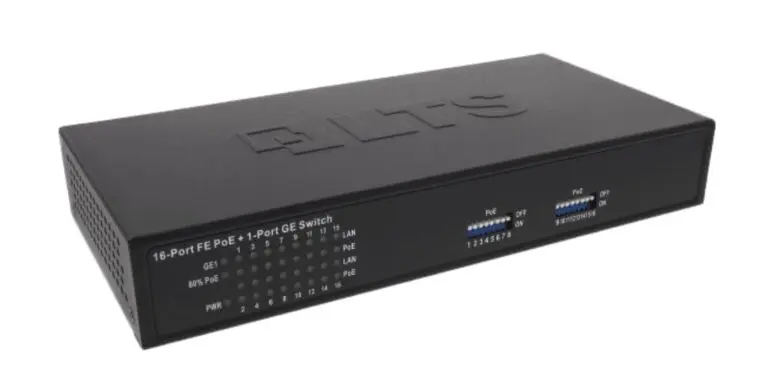

What is Power Over Ethernet? How does it help the security camera industry? Can we exceed the 328′ cable run?

Power over Ethernet (PoE) can carry network data and electrical power to a compatible IP camera over a single Ethernet cable. A standard copper Ethernet channel is typically limited to 100 meters (328 feet); longer paths may require a properly designed extender, powered switch, fiber link, or another approach. Local recording can continue without internet access when the cameras, network, power, and recorder support it, while remote viewing and cloud recording need an appropriate internet connection. BCS can design the cable route and power budget for your site.

security camera industry

Do you need PoE Security flood light installation services in Austin? No camera visibility at night due to limited lighting?

Do you have a security camera system without infrared night vision or illumination capabilities? Is a specific area outside your home in a fully darkened place? Is outdoor illumination vital to you? Would you like more lighting so you can see your camera view at night? Are you looking for a motion-activated lighting that can be turned off when not in use to save electricity and discourage criminals? For lighting-related issues, we have the ideal fix. Adding a floodlight will make a world of difference! With the Reolink Floodlight, you will have a bright motion-activated security floodlight for a smart home, a built-in siren, and a PoE or Wi-Fi connection options for more lighting you can.

Need Help Installing a Camera or Floodlight?

Need a camera or floodlight installed at a hard-to-reach spot? BCS can assess mounting position, available power, cabling, and compatibility with your equipment. Learn about our Austin camera installation service or contact us for an estimate.

List of Security Camera Features Mainly but Not Limited To:

Night Vision:

Although infrared light is invisible to humans, cameras are able to identify and use wavelengths to “see” in the dark. They can function in various lighting and weather conditions. Some cameras also come with color night vision equipped with special infrared technology to enhance visibility in low-light conditions. Night vision cameras are known to improve surveillance and enhance detection all while saving cost.

Weather Resistance:

A weatherproof security camera is a type of surveillance camera that is typically equipped with a housing or cover designed to protect it from the elements. It reduces typical wear and tear on the camera’s components and preventing the cameras inside components from being harmed by dust, snow, or rain. These weatherproof covers, constructed from stainless steel or other robust materials, guarantee proper protection for your device. It ensures your device functions correctly throughout the hot summers and the cold winters. Weatherproof security cameras are the best option for areas with variable climates and frequent adverse weather conditions.

Smart Home Technology:

Connecting using a mobile application, you may remotely monitor and control everything by voice commands pushing a key fob, or entering your password into a keypad.

Remote Monitoring:

Not everyone can afford to employ a dedicated team for continuous property monitoring, especially in the residential or small business sectors. Thankfully, continuous monitoring no longer necessitates a dedicated team. With remote monitoring you have ability to view, manage, and operate video cameras from afar. Remote monitoring utilizes an internet connection to transmit the footage captured by your security cameras to an external device, such as a phone, watch, or computer. A loudspeaker can be employed to address intruders, often deterring them effectively. The smart video analysis provided by these systems negates the necessity for a physical guard, thereby reducing costs as well. With features like direct footage export from the app, sharing videos is effortless, whether they’re engaging clips for friends or crucial evidence of a break-in for law enforcement.

Artificial Intelligence (AI):

automatically detects threats, filters out false alarms, and alerts operators to genuine dangers, enabling them to respond appropriately. AI-powered threat detection systems are effective both day and night, can identify objects from great distances, process vast quantities of video feeds in mere seconds, and apply sophisticated analytics instantly. They also assist in identifying unconventional issues with facial recognition software. AI security cameras are engineered to protect your business premises by mitigating losses due to shoplifting, intrusion, robbery, and other high-impact incidents. They not only contribute to the safety of your people, facilities, and information but also result in significant savings of time, resources, and money.

Motion Detection:

A primary advantage is the protection against burglaries. The quicker a thief is detected; the faster police can be dispatched to your location. Surveillance cameras equipped with motion detection can instantly recognize any movement and alert you through a smartphone app or send you an email if there’s any activity in your home. The motion sensor’s masking feature enables you to adjust sensitivity levels effortlessly, helping to prevent bothersome false alarms. By creating masks, you can decrease the number of notifications and video events on your timeline by excluding areas prone to triggering these false alarms.

Field of View (FOV):

The field of view (FOV) is crucial as it defines the extent of the area or angle that a camera can capture and monitor. The FOV of security cameras can differ significantly between models. Some cameras are equipped with fixed lenses, offering a consistent FOV, whereas varifocal cameras have the ability to zoom in or out, adjusting the FOV to meet specific user requirements. Greater field of vision and more object capture are achieved with smaller or wide-angle lenses. Certain security cameras come equipped with wide-angle lenses, offering an expansive field of view (FOV) that is well-suited for overseeing large spaces such as parking lots or open areas. Conversely, there are cameras with narrower lenses, perfect for detailed monitoring of specific targets or locations. The field of vision is reduced with larger or narrower angle lenses, allowing for the capture of a smaller region.

Controllable Cameras:

Pan, Tilt, Zoom (PTZ)- Give user more situational awareness and the capacity to react swiftly to possible security risks by enabling them to remotely operate and modify the camera’s position, angle, and zoom level. PTZ cameras move anywhere between zero pan/tilt and the full 360-degree pan/180-degree tilt. This gives control over the required field of view (FOV). PTZ cameras can be paired with stationary cameras to augment monitoring capability. With PTZ cameras tracking suspicious activity has never been easier with PTZ cameras. Remote camera control allows users to change the camera’s field of view without having to go onsite.

Wide Dynamic Range (WDR):

Wide Dynamic Range technology enhances the image quality of cameras in high-contrast lighting situations, where both dim and bright areas exist within the field of view. A camera with robust WDR (Wide Dynamic Range) performance can capture details clearly by correctly exposing both the darkest and brightest areas of a scene. Therefore, cameras equipped with WDR technology are especially suitable for environments like building entrances, ATMs, transportation hubs, and areas adjacent to windows or similar light-intensive spots.

Wireless Camera:

The convenience of placing them anywhere in the home without the hassle of wires has made wireless cameras extremely popular. The installation process is straightforward, allowing you to position the camera in any desired direction. The ability to easily adjust the camera and mount it in elevated spots without concern for power outlets can be a significant convenience. No wired installation, Wi-Fi network connection, cost efficient, flexible, easy & faster setup.

Cloud Storage:

Cloud-based systems provide the ability to access both live and recorded video footage from any location with internet connectivity. This versatility is crucial for businesses operating across multiple sites or requiring remote surveillance. Cloud storage offers secure off-site backup of video data, safeguarding against physical harm, theft, or disasters that could impact on-premises equipment. Additionally, cloud-based systems are designed for easy integration with other cloud solutions and third-party apps, improving their functionality and ensuring seamless compatibility with current infrastructures.

Active Deterrence:

Uses several features, like a built-in microphone, a siren alert, a flashing red and blue light, an LED or white light that flashes, to actively warn or scare away intruders.

Resolution:

The higher-resolution video and images enable you to capture footage in greater detail and allow you to zoom into areas of interest, in a clearer format, after a recording has been made. A higher resolution provides greater detail and clarity, while a higher frame rate enables more accurate monitoring of object movements. However, high-resolution security cameras can overwhelm the average Wi-Fi router, making it necessary for most users to adjust the quality settings to find an optimal balance. Home security cameras are available in various resolutions to suit your requirements and budget. The most prevalent resolutions on the market are 2MP (1080p), 4MP (1440p), 5MP (1920p), and 8MP (4K/2160p).

Types of Cameras and Their Power Consumption

These are just rules of thumb, there are always exceptions.

Dome Cameras

  • Description: Dome cameras are named for their dome-shaped housing and are widely used for indoor and outdoor surveillance. They are often vandal-resistant and provide a discreet surveillance option.

  • Typical Power Consumption: 3-8 watts

  • PoE Support: Yes, commonly supported.

Bullet Cameras

  • Description: Bullet cameras have a cylindrical shape and are typically used for long-distance viewing. They are often installed in outdoor environments due to their robust housings.

  • Typical Power Consumption: 4-12 watts

  • PoE Support: Yes, commonly supported.

PTZ (Pan-Tilt-Zoom) Cameras

  • Description: PTZ cameras can pan, tilt, and zoom to cover larger areas and provide detailed views. They are ideal for monitoring large spaces such as parking lots and stadiums.

  • Typical Power Consumption: 10-30 watts

  • PoE Support: Yes, but often require PoE+ due to higher power needs.

Turret Cameras

  • Description: Turret cameras, also known as eyeball cameras, are similar to dome cameras but with a ball-and-socket design that allows for easy positioning. They are versatile for both indoor and outdoor use.

  • Typical Power Consumption: 3-8 watts

  • PoE Support: Yes, commonly supported.

Fisheye Cameras

  • Description: Fisheye cameras provide a 360-degree panoramic view, making them suitable for monitoring large areas with a single camera. They are often used in retail and commercial spaces.

  • Typical Power Consumption: 4-10 watts

  • PoE Support: Yes, commonly supported.

Box Cameras

  • Description: Box cameras are versatile and can be used with different lenses to suit various surveillance needs. They are often used in environments requiring detailed and high-resolution images.

  • Typical Power Consumption: 5-15 watts

  • PoE Support: Yes, commonly supported.

Thermal Cameras

  • Description: Thermal cameras detect heat and are used in environments where standard cameras might be ineffective, such as in complete darkness or through smoke. They are used in industrial and security applications.

  • Typical Power Consumption: 6-20 watts

  • PoE Support: Yes, but may require PoE+ due to higher power needs.

Wireless Cameras

  • Description: Wireless cameras use Wi-Fi for data transmission and are ideal for areas where cabling is difficult. They require power through an adapter or battery.

  • Typical Power Consumption: 3-10 watts (if using an adapter)

  • PoE Support: No, requires separate power source.

4K Cameras

  • Description: 4K cameras provide ultra-high-definition video, offering greater detail and clarity. They are used in environments where high-resolution footage is critical.

  • Typical Power Consumption: 8-15 watts

  • PoE Support: Yes, often require PoE+ due to higher power needs.

Power Consumption Summary

At Business Communication Solutions, we provide expert advice on selecting the right cameras for your needs and ensure they are powered efficiently using the latest PoE technology. This guarantees optimal performance, reliability, and energy efficiency for your surveillance systems.

Brands that we sell and install includes but not limited to Swann, Reolink, Lorex, Alibi, LTS, GNS, Unifi and many more. Click on brands below for our promotional deals we have right now or call 512.257.1433

FAQs

What is the difference between an NVR and a DVR security camera system?

An NVR (Network Video Recorder) works with digital IP cameras connected via Ethernet (Cat6) cables, processing and encoding video at the camera level for higher resolution (4K and beyond). A DVR (Digital Video Recorder) connects to analog cameras via coaxial cable and processes video at the recorder, typically offering lower resolutions and less flexible wiring.

Which is better for outdoor commercial surveillance: Bullet, Dome, or Turret cameras?

Turret (eyeball) cameras are widely regarded as the best overall choice because their ball-and-socket design eliminates IR light reflection and water droplet glare common on dome covers. Bullet cameras are ideal for long-range perimeters, while vandal-resistant Dome cameras are best for low ceilings accessible to tampering.

How much storage does a 4K security camera system require?

A single 4K camera recording 24/7 at 15 FPS using modern H.265 compression typically requires 30 to 45 GB per day. An 8-camera 4K commercial system keeping 30 days of continuous retention requires approximately 8 TB to 12 TB of dedicated surveillance hard drive capacity.

What is the difference between PoE (802.3af) and PoE+ (802.3at) for cameras?

Standard PoE (802.3af) delivers up to 15.4 watts per port, which is sufficient for standard fixed dome or turret cameras (3-8W). PoE+ (802.3at) delivers up to 30 watts, which is required for motorized PTZ cameras, long-range night illumination, built-in heaters, or high-power thermal sensors.

How do I choose between a 2.8mm and 4.0mm camera lens?

A 2.8mm lens offers a wide field of view (approx. 90° to 105°), ideal for indoor rooms, small parking lots, and building perimeters where broad situational awareness is needed. A 4.0mm lens provides a narrower view (approx. 75°), delivering higher pixel density on target objects like entry doors, gates, and cash registers.

What IP weather rating is needed for outdoor cameras in Central Texas?

Outdoor cameras in Austin should have a minimum rating of IP66 to withstand driving summer rainstorms and dust. For exposed, unsheltered poles or roof edges, an IP67 rating is recommended to ensure complete weatherproofing against heavy thunderstorms.

Does a commercial security camera system require an ongoing monthly subscription?

No. On-premises IP camera systems utilizing a local NVR or VMS do not require mandatory monthly cloud subscriptions. Cloud systems provide offsite redundancy but incur recurring monthly fees, whereas local NVRs offer full ownership with remote app access at zero monthly cost.

Can BCS install and configure security cameras that I purchased myself?

Yes. Business Communication Solutions regularly installs, mounts, cables, and configures customer-provided camera hardware in Austin, whether you purchased a commercial NVR bundle or individual IP cameras.